INTERN @ LAOS (2023 – 2026)
Four Years of Impact, Data, and Leadership

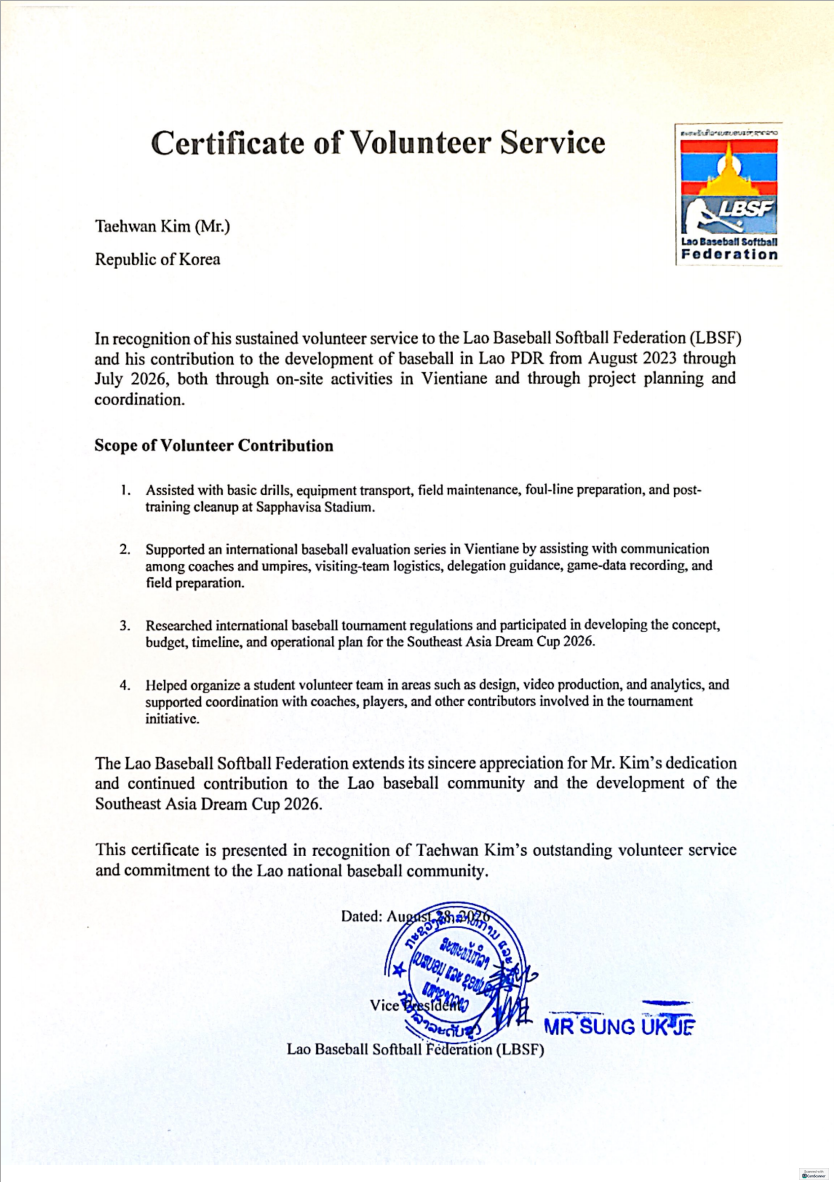
Intern@Laos2023
— Carrying Equipment, Chalking Lines
The reply came two weeks after I sent a DM to the Lao Baseball and Softball Federation. On the phone, my coach didn't offer grand promises:
"You're the first Korean student who's ever asked to volunteer here. There's no romance in it. You'll carry equipment, chalk foul lines, and get by without a translator."
I liked that answer better than I expected to. There was no romance for David standing in front of Goliath either.
In July 2023, I changed planes three times and landed in Vientiane. Sapphavisa Stadium was smaller than it looked in photos, and the outfield dirt was rough underfoot. With only two proper coaches, I stepped in where needed—assisting with basic drills, carrying heavy bats and gloves, and cleaning up the field after double sessions under the blazing sun.
Later that autumn, at the Hangzhou Asian Games, I watched the players turn months of sweat into a historic first-ever international victory against Singapore. Watching a team I had chalked lines for pull off a seven-run comeback taught me a lifelong lesson: even the smallest contribution, grounded in dedication, can ignite monumental change.


Intern@Laos2024
— A Food Truck on the Dirt
By 2024, my perspective expanded from the dugout to the broader community. Following our historic victory,
I realized sports management wasn't just about organizing practice—it was about creating long-term, self-sustaining opportunities.
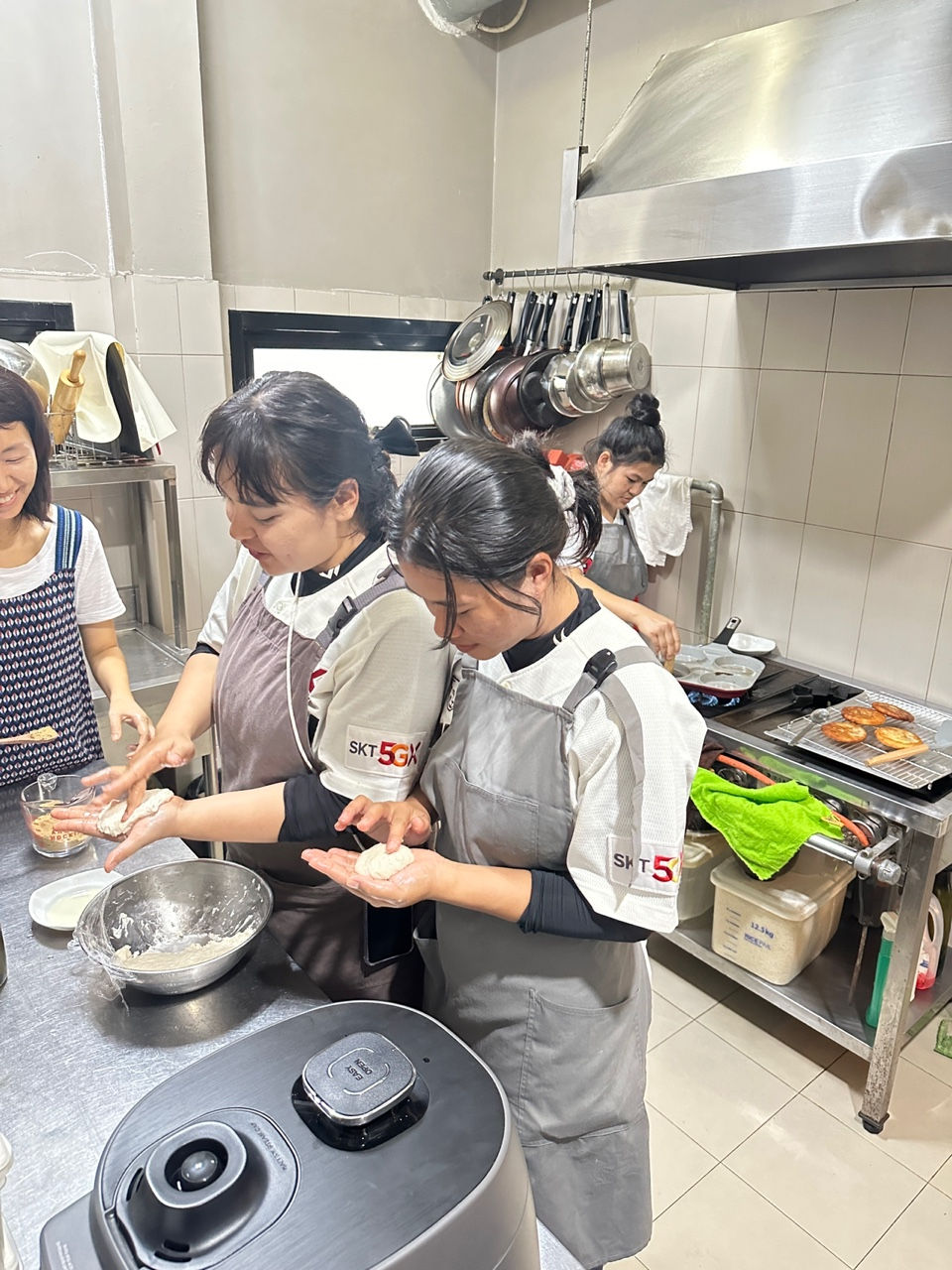
From February to May, I planned and managed a crowdfunding project on LimonAid to launch a K-Food truck business, designed to empower ethnic minority youth in Laos toward economic independence. I handled every operational detail: conducting field research, crafting storytelling content, managing flight schedules, and building project budgets.
In June, I returned to Vientiane and spent three days running live operations with a local youth sports club—prepping ingredients, serving customers, and balancing sales settlements. Looking at the financial reports under the fluorescent lights, I realized that sports could serve as a gateway to broader social enterprises, combining business acumen, community development, and international cooperation.


Intern@Laos2025
— A Broom, a Voice, and a Shared Field
In June 2025, ahead of the Southeast Asian Games, Thailand, Singapore, and Laos gathered in Vientiane for a crucial international evaluation series. Returning to the field for my third year, my responsibilities expanded beyond data analytics into international operations and ground diplomacy.
Under the sweltering heat, I served as a vital operational bridge between the three nations—translating between multi-lingual coaches and umpires, coordinating visiting team logistics, and guiding delegations through tournament protocol. At the same time, I continued logging game metrics on my laptop, using data as a universal language to support the coaching staff during high-stakes matchups.
Yet, behind the scenes, no task was too small. Hours before the first pitch, I picked up a broom and shovel to clear debris and level the rough dirt, improving the field environment so every athlete could perform safely. Watching players from rival nations exchange high-fives on the ground we had prepped together under the sun, I realized that true sports management starts from the ground up—combining humble, hands-on dedication with strategic execution to build a stage worthy of respect.

Intern@Laos2026
— A Rulebook, a Whiteboard, and a Stage

In early 2026, the news hit like a blow: Laos would not be able to participate in the Asian Games as planned. Years of preparation faced a sudden dead end. But if the door to a major international stage was closed, I decided we would build a new stage ourselves.
I printed out official WBSC and BFA sanctioning regulations at my library desk, underlining eligibility requirements and application procedures. I pitched the idea of hosting an international tournament directly to the federation, backing it up with a five-page budget and detailed timeline.
I recruited a student volunteer team specializing in design, video, and analytics, writing on our whiteboard: "We are not just organizing a tournament — we are creating a stage." We onboarded retired KBO umpires and physical therapists as mentors, secured official participation from Mongolia and Cambodia, and launched a $200,000 global crowdfunding campaign backed by the KBO, KBSA, and the Korean Embassy.
Four years ago, I sent a single DM to a federation I barely knew. Today, we aren't just waiting for a stage—we are building it, one signature, one donation, and one night at a time.