Playing to the Crowd: Musicians, Audiences, and the Intimate Work of Connection
Updated: Jan 13
Playing to the Crowd: Musicians, Audiences, and the Intimate Work of Connection
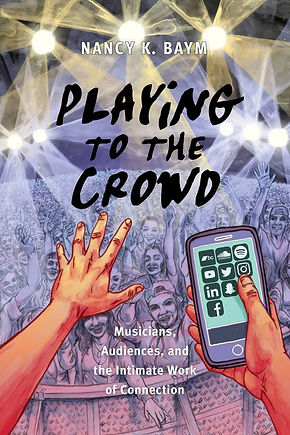
Core thesis and contribution
At first glance, Baym’s book seems distant from sports analytics. In practice, it is highly relevant because modern sport is increasingly a platform-mediated performance economy—not unlike music. Baym’s key insight is that connection is labor: creators (musicians) perform “intimacy work” to sustain audiences across digital channels. This maps directly onto athletes, teams, and sports journalists who now operate within attention markets.
Athletes and teams as platform creators
Athletes are no longer just competitors; they are brands expected to cultivate parasocial relationships, respond to fans, document training, and maintain authenticity while managing reputation risk. That authenticity is not “natural”; it is managed work. Teams similarly produce always-on content ecosystems.
From an AI-management perspective, Baym helps you see that engagement metrics (likes, watch time, sentiment) can become a secondary performance system. When organizations apply AI to optimize fan engagement—recommendation algorithms, personalized offers, dynamic ticket pricing—they are effectively engineering the crowd relationship. Baym’s framework warns that this can intensify pressures to be “always accessible,” increasing burnout and distorting identity.
Journalism under intimacy pressure
Baym also clarifies why sports journalism is struggling with boundaries. Reporters are pressured to become personalities, cultivate communities, and maintain engagement—sometimes at the cost of independence. This is the same intimacy economy: audiences reward closeness, not just accuracy. AI-driven distribution systems amplify the dynamic by rewarding content that triggers emotion and repeat interaction.
In this sense, Baym provides the missing sociological layer that the other books largely omit: analytics and AI do not operate in a vacuum; they operate inside relationship markets where attention, trust, and identity are the core currencies.


Comments